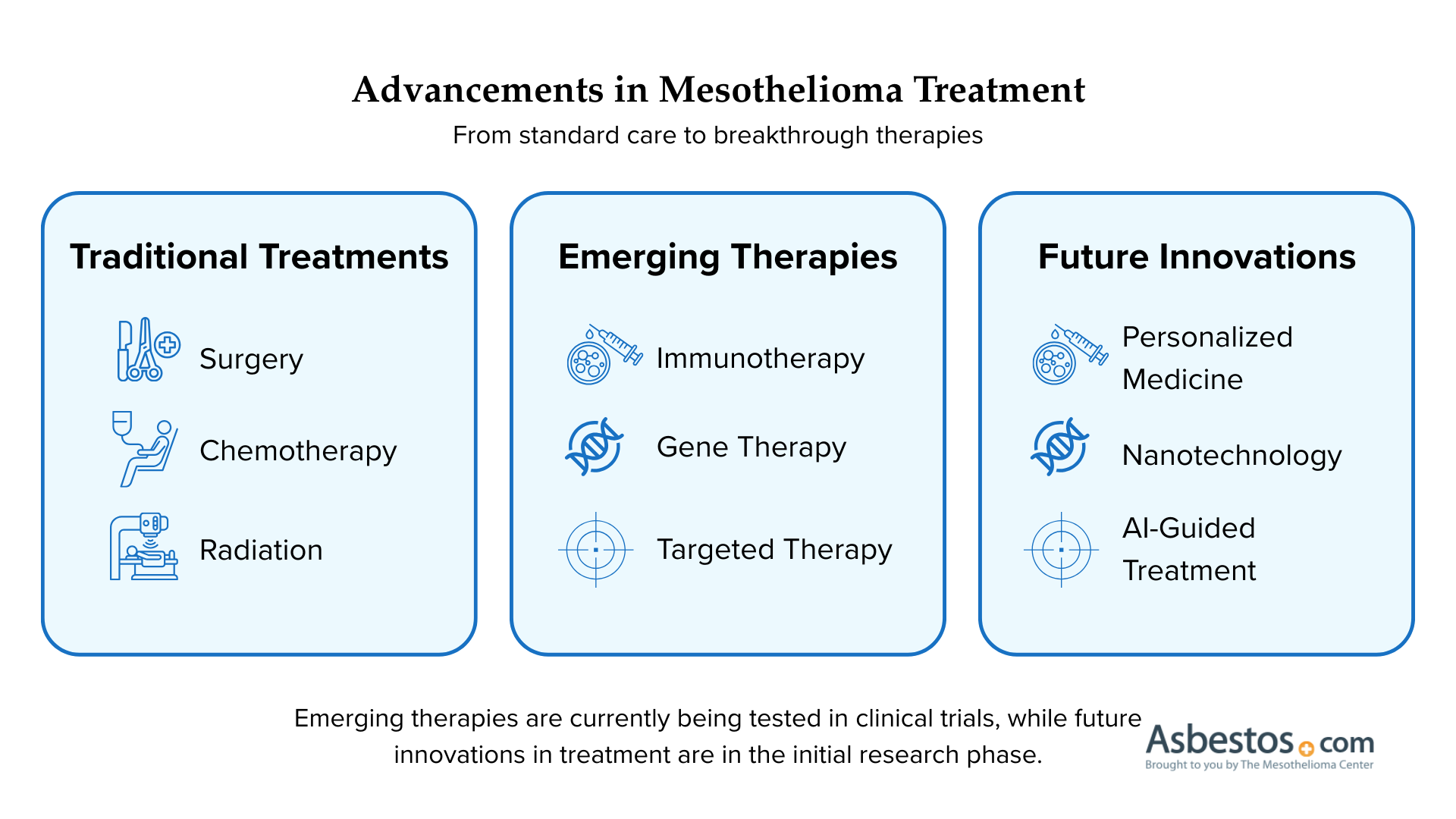
There is no cure for mesothelioma yet, but treatment advances are improving outcomes. Cutting-edge combinations of immunotherapy, chemotherapy and surgery are helping people live longer with this cancer. And new treatments like gene therapy and cancer vaccines show promise in clinical trials.
Diagnosed with mesothelioma? Get a free guide to learn about the latest treatment options.
Access information on top mesothelioma treatments.
There isn’t a definitive cure for mesothelioma. However, data shows a 1-year survival rate of 79.6% for pleural mesothelioma patients who receive multimodal care, and 50% of peritoneal patients who receive HIPEC survive 5 years or more. According to our 2025 patient survey, 11% of respondents achieved remission, 100% of whom underwent active treatment. Overall, 12% of all mesothelioma patients who receive treatment survive 5 years or more.
Chemotherapy success: Carboplatin was associated with a 72% higher remission rate for those undergoing chemotherapy.
Expert consultation: 95% of people in remission consulted 2 or more doctors.
Remission rate: 11% of survey respondents reported their treatment led to remission.
Surgical outcomes: 23% of patients who achieved remission had surgery as part of their care plan.
Treatment protocol: 100% of patients in remission underwent some form of active mesothelioma treatment.
While experts continue to pursue a complete cure, mesothelioma can often be managed as a chronic condition. Because this cancer spreads quickly and symptoms often don’t appear for many years, most cases are diagnosed at a later stage. At that point, the goal of treatment shifts from a definitive cure to achieving partial remission, which is when the cancer shrinks or stops growing.
As our 2025 survey data shows, the path to remission almost always involves a combination of specialized therapies and multiple medical opinions. Even if a patient has already spoken to two doctors, seeking further expertise can be the turning point in finding a successful mesothelioma treatment path. This was the case for 95% of our successful survey respondents.
Expert Insight
“I try to encourage patients to think of it more in terms of a goal of long-term survival with good quality survival,” mesothelioma specialist Dr. Andrea Wolf tells us. Seeing a mesothelioma specialist can also lead to better results.
Dr. Andrea Wolf, thoracic surgeon and mesothelioma researcher
Mesothelioma Remission
Mesothelioma remission means your cancer has responded well to treatment. Doctors generally look for 2 types of remission: partial and complete. While complete remission is the goal, both types are major treatment victories that allow people to manage the disease and enjoy more time with their families.
Determining Mesothelioma Remission
Achieving remission: This usually involves tumors shrinking and mesothelioma symptoms improving for at least 1 month.
Complete remission: Means doctors can’t detect any signs of cancer on your scans.
Partial remission: Occurs when tumors shrink 50% or more.
Remission is a separate concept from overall survival. Survival rates measure how long a person lives with the disease, while remission describes a period where the cancer is specifically shrinking or undetectable. For example, many peritoneal mesothelioma patients who have surgery with HIPEC reach higher 5-year survival rates. However, the specific goal for these patients remains reaching a state of remission to improve their daily health and comfort.
2025 Mesothelioma Survivor Survey Results
11% of respondents to our patient survey in remission
100% of those in remission received treatment
23% of those in remission underwent surgery
Living a Full Life With Mesothelioma
A definitive cure is the ultimate goal of researchers, but many mesothelioma survivors have already found ways to live active and fulfilling lives. Success often comes when patients manage the cancer as a chronic condition, which allows them to maintain a sense of normalcy and continue their daily routines. This approach combines advanced medical care with a strong focus on personal well-being.
Tips for Living Well During Mesothelioma Treatment
Build a support network: Lean on family, friends, and survivor communities to manage the emotional challenges of a diagnosis. Support groups offer a safe place to share stories with people who truly understand your experience.
Focus on physical health: Keep your strength up through gentle exercise like walking or light stretching. Proper nutrition and enough rest help the body handle treatment side effects more effectively.
Prioritize mental well-being: Look toward the future through small goals and stay informed about new therapies like immunotherapy. A positive outlook and mental health support can significantly improve your overall quality of life.
Quality of life care is a vital part of this process. Managing symptoms and controlling pain help you feel your best while you undergo therapy. Counseling and support groups also help reduce the feeling of isolation that often comes with a cancer journey.
Some patients reach incredible milestones. Trina Reif has lived with peritoneal mesothelioma for more than 20 years. Kim Madril is thriving long after her pleural mesothelioma treatment, and Carla Fasolo remains an active advocate for others with the disease. These stories show that long-term survival is possible for patients who receive comprehensive, multimodal care at experienced cancer centers.
Survivor Experience
“You’re almost grateful for what you have. I’m grateful that I am still here. I am so happy that I’m still here. Embrace the moment,” she tells us. “I’m at the point in my life where things that might have bothered me before don’t. I think, ‘Oh, well. That’s certainly not as bad as going through radiation. It’s certainly not as bad as having surgery.”
Kim Madril, pleural mesothelioma survivor
Verified Asbestos.com Survivor
Latest Research for a Mesothelioma Cure
Researchers are closer than ever to finding a cure for mesothelioma. Recent FDA approvals and new immunotherapy combinations show medical science is advancing toward more effective, long-term solutions. Global studies now focus on harnessing the immune system, using genetics to personalize therapy and blocking the signals that tell cancer cells to grow.
One promising study involves proteins like MCP-1. New research from 2025 in the journal Cancer Biomarkers suggests targeting this protein could lead to better ways to treat fluid buildup around the lungs. These innovations help doctors move beyond traditional methods to fight the disease more precisely.
Recent Mesothelioma Treatment Breakthroughs
Opdivo and Yervoy immunotherapy: This combination became a standard treatment after its 2020 FDA approval. It proved that immunotherapy can successfully treat mesothelioma and changed how doctors approach this cancer.
Keytruda and chemo combination: This first-line treatment for advanced pleural mesothelioma set a new standard of care in 2024. The KEYNOTE-483 trial confirmed this approach significantly extends overall survival.
Pre-surgery immunotherapy: Johns Hopkins experts recently tested a sequence of Opdivo and Yervoy before surgery, then administered more immunotherapy afterward. Results from this 2025 Phase 2 trial showed patients lived a median of 28.6 months, which is much higher than the typical 18 month average.
Results from the Johns Hopkins trial show that 36% of patients remained cancer-free at their follow-up. This data proves that using immunotherapy before surgery is a safe and effective option for improving patient outcomes.
Gene therapy and CRISPR editing specifically attack mesothelioma at the genetic level to stop tumor growth. Researchers are even developing drugs like Avastin to starve tumors, cutting off their blood supply. These tools mean that even if a doctor can’t offer a traditional mesothelioma cure today, the options for effective treatment are growing every year.
Immunotherapy marked a turning point when the FDA approved Opdivo (nivolumab) and Yervoy (ipilimumab) in 2020. In September 2024, the agency approved Keytruda (pembrolizumab) with chemo as the first-line treatment for pleural mesothelioma, a major step toward longer survival and improved quality of life.
Gene therapy and CRISPR gene editing show promise by targeting cancer growth at the genetic level. Viral-based gene therapies use modified viruses to deliver tumor-suppressing genes. Researchers are also developing next-generation angiogenesis inhibitors like Avastin (bevacizumab), which starves tumors by cutting off the blood supply.
Other emerging treatments include epigenetic therapy, which explores how chemical changes in DNA can turn off anticancer mechanisms. Photodynamic therapy activates drugs with light to kill cancer cells without harming healthy tissue.
500+ SPECIALISTS AVAILABLE
Get to the Right Doctor, Faster
Connect with top-rated doctors specializing in mesothelioma treatment, who will personalize treatment options based on your diagnosis.
Clinical trials in 2026 continue to increase the number of effective options for treating mesothelioma. Now that trials like KEYNOTE-483 have set new care standards, researchers are testing more advanced and diverse treatment combinations. For example, Baylor College of Medicine and Duke University are conducting the NEMO trial. This study tests immunotherapy combined with chemo both before and after surgery to improve outcomes for eligible patients.
Enrolling in these trials gives you a path to the latest new and emerging mesothelioma treatments before they’re available to the general public. These programs allow you to access advanced surgical techniques and precision monitoring that help extend survival. These breakthroughs show that while there isn’t a single cure yet, the list of effective treatment options grows every year.
Percentage of patients who were alive and recurrence-free at follow up.
36%
Source: Johns Hopkins Phase 2 trial for mesothelioma patients
Mesothelioma Research Centers
Much of the most impactful research happens at specialized treatment centers across the United States. These facilities range from laboratory-focused programs to those managing large-scale clinical trials. The National Cancer Institute is one of several organizations that fund these programs to help improve mesothelioma treatment and survival rates.
Centers Conducting Mesothelioma Research
AdventHealth Celebration in Kissimmee, Florida
Harvard Medical School and Brigham and Women’s Hospital
Mount Sinai Hospital in New York City
National Institutes of Health
Shukla Research Lab at the University of Vermont
Vaccine and Immunotherapy Center at Massachusetts General Hospital
Top treatment centers offer the best resources for treating complex mesothelioma cases. Specialists at these locations work in multidisciplinary teams to ensure you receive the most comprehensive care possible. Our Patient Advocates can help you find a mesothelioma specialist and learn more about which active trials may be right for you.
Exclusive Content
Dr. Jacques Fontaine: The Future of Mesothelioma Treatment
What is the future hold for mesothelioma treatment? I think the future for mesothelioma treatment is a bright one. I’ll tell you a story. When I was at an intern, in Montreal, I remember seeing my first mesothelioma patient. This is in the early nineties.
And when I spoke to the professor and explained to them, the case of mesothelioma, the professor told me you know the best type of treatment for this patient is to give him a fishing pole and tell him to go fishing.
Then years later, I went to Bringham and Women’s Hospital with Dr. Sugar Baker, and then learned that there’s a lot of options for mesothelioma. And as the science continues to grow, as we start looking at it from a different angle, as we start thinking outside the box, There’s gonna be a lot of innovative and very interesting treatments for this disease.
I think the way to make a progress is to think outside the box, learn how to make the patient’s immune system go after these cancer cells.
Learn how to find a better way to diagnose and diagnose this disease earlier and find ways to use the patient’s genes to beat this disease. And that’s what I and my team at Moffitt Cancer Center try to achieve for our patients. Innovative ways with our clinical trials, cutting edge radiation therapy that we offer, and state of the art surgery for our mesothelioma patients.
Current Mesothelioma Treatments and How They’re Changing
A big part of finding a cure is making existing mesothelioma treatments work better. Surgeries become more precise, chemo and radiation work more effectively and the timing of these therapies and combinations is refined.
When the FDA approved Opdivo (nivolumab) and Yervoy (ipilimumab), immunotherapy became a standard treatment for mesothelioma. Experts continue to find ways to refine these therapies studying new combinations with chemo, radiation and surgery.
Advancements in Mesothelioma Treatment
Chemotherapy: The FDA approved a combination of Alimta (pemetrexed) and platinum chemo with the immunotherapy drug Keytruda (pembrolizumab) as a first-line treatment for advanced pleural mesothelioma in September 2024. Current research focuses on how these combinations improve overall survival for patients with advanced stages of the disease.
Immunotherapy: This standard treatment is currently FDA-approved specifically for pleural mesothelioma, though research is underway to expand its use to other types. One clinical trial currently recruiting will compare chemo alone to chemo with immunotherapy for peritoneal mesothelioma.
Multimodal therapy: Doctors use combinations of different therapies, such as surgery and chemo, to create a more effective treatment plan. Clinical trials are now looking at the timing of these therapies, such as adding immunotherapy before a surgical procedure.
Radiation: This traditional therapy uses high-energy beams to shrink tumors and is being explored in several new applications. Researchers are now looking at the benefits of using radiation before surgery or combining it with immunotherapy drugs.
Surgery: Specialists continually refine surgical techniques to make them less invasive and more effective at removing visible tumor mass. Clinical trials also look at new pairings, such as a recent pilot study that tested surgery with photodynamic therapy.
Tumor Treating Fields: This FDA-approved therapy uses low-intensity electrical fields to disrupt the division of mesothelioma cancer cells. When used with chemo, TTFields have been shown to extend survival about 4 to 6 months for patients with unresectable pleural mesothelioma.
Ongoing refinements in these treatments are steadily improving how doctors treat mesothelioma. These advances enhance the effectiveness of treatments and offer patients better chances to live longer with improved quality of life. As research continues, combining and sequencing therapies more precisely remains key to making progress toward a future cure.
MATCHED TO YOUR DIAGNOSIS
Find an Immunotherapy Clinical Trial
Discover new treatments with immunotherapy clinical trials near you. Get help with eligibility and enrollment.
Emerging treatments are innovative therapies currently being developed and tested in clinical trials to improve patient outcomes. These methods are not yet part of the standard of care but represent the next generation of options for treating this disease.
The following emerging treatment options for mesothelioma are still being tested through clinical trials. As researchers learn more, these methods could become safer and more helpful. One day, they might become part of regular mesothelioma treatment.
Emerging Mesothelioma Treatments
Anti-angiogenics: Cancer needs blood vessels to grow. Avastin (bevacizumab) helps block them. This may slow mesothelioma growth.
Cryotherapy: This therapy kills cancer cells with a probe that applies extreme cold to tumors. It’s mainly used to control tumors that return after treatment.
Epigenetic Therapy: This treatment changes how a person’s genes are turned on or off without altering the DNA sequence itself. Research shows that epigenetic changes contribute to mesothelioma development and may affect survival. Epigenetic therapy aims to reverse these changes to slow tumor growth. It is still in early stages, with ongoing clinical trials exploring drugs like tazemetostat and mithramycin. These therapies may work best combined with other immunotherapies.
Gene Therapy: The goal of gene therapy is to repair problems that defective or missing genes can cause. Suicide gene therapy modifies cancer cells to include a self-destruct gene. Treatment with the p53 gene helps the immune system find and kill cancer cells.
Photodynamic Therapy: Activating a photosensitizing drug with a unique light frequency can kill cancer cells. Photodynamic therapy only affects cancerous areas, avoiding damage to surrounding healthy tissue.
Vaccine Therapy: Like vaccines for flu and other diseases, a mesothelioma vaccine helps your body produce antibodies to fight cancer. This treatment can provide long-term protection against a recurrence for patients in remission.
Virotherapy: This emerging therapy involves laboratory-manipulated viruses that deliver medication and gene therapy inside cancer cells. Virotherapy is also notable for eliciting an immune response and combining well with other immunotherapies.
Pleural mesothelioma survivor Kay Kilpatrick-Simmons underwent cryoablation at UCLA. She tells us she’s grateful for the care she received from Dr. Robert Cameron and now focuses on staying positive.
“Mental attitude plays into this. How much? I’m not sure,” Kilpatrick-Simmons shares. “I stay away from anything that might be depressing. I try not to even think about this disease unless I have a scan coming up.”
Obstacles to Finding a Mesothelioma Cure
The fact that mesothelioma receives significantly less research funding than more common cancers like lung, colon or breast cancers is a primary reason doctors still face challenges in finding a cure. National initiatives, such as the Cancer Moonshot, aim to accelerate research on rare cancers, including mesothelioma. However, it doesn’t get as much attention or funding as more common cancers.
The government gives less money to mesothelioma research than to other cancers. Researchers also struggle to find enough people for clinical trials, especially those involving surgery, even though surgery has helped some people live longer.
How You Can Help Find a Mesothelioma Cure
Individual actions such as participating in research, donating to advocacy groups and raising awareness are essential to accelerating the development of a mesothelioma cure. Joining clinical trials, donating to research or supporting advocacy groups are ways you can help find a cure for mesothelioma. When you get involved, you make a difference for survivors and their families, bringing hope for a better future.
Ways You Can Help Find a Mesothelioma Cure
Helping advocacy groups: Cancer advocacy groups educate the public, policymakers and health care professionals about the impact of mesothelioma. They also raise funds for research and to support affected families.
Participating in clinical trials: Participation allows patients to contribute directly to the advancement of treatment options and an eventual cure. These trials have led to FDA-approved treatments that help people live longer with mesothelioma.
Raising awareness: Increased awareness of a disease contributes to early detection, better treatment outcomes and support for research initiatives. Raising awareness also promotes early diagnosis when treatment is most effective.
Supporting research: Supporting organizations financially or through volunteer work helps researchers find a cure for mesothelioma. Every contribution, big or small, makes a difference in the fight against this disease.
Peritoneal mesothelioma survivor and writer Tamron Little tells us, “Using my voice to share my story is vital to spreading mesothelioma awareness. I’m pretty comfortable talking with people and sharing my journey on multiple platforms. This allows me to change the narrative about the typical mesothelioma patient. It’s important for people to actually see that a young woman of color was exposed to asbestos as a toddler and diagnosed with peritoneal mesothelioma at the age of 21.”
Each year, the mesothelioma community comes together to raise awareness and support research through key events and campaigns. The annual Miles for Meso run/walk helps fund the Asbestos Disease Awareness Organization, which supports mesothelioma research and awareness. Mesothelioma Awareness Day is also recognized every September 26 to raise awareness about the rare cancer and asbestos exposure. It also promotes finding a cure.
Expert Insight
I think the future for mesothelioma treatment is a bright one. As we think outside the box, there’s going to be a lot of innovative and very interesting treatments.
Dr. Jacques Fontaine, director of the Mesothelioma Research and Treatment Center at Moffitt Cancer Center
Common Questions About Finding a Mesothelioma Cure
Has anyone been cured of mesothelioma?
No one has been medically “cured” yet, but several patients have achieved long-term remission and lived for decades after their diagnosis. For example, peritoneal mesothelioma survivor Trina Reif lived for more than 20 years since her diagnosis in 2001. Medical research documents several cases of long-term and complete remission, but partial remission is more common. Advancements in treatments through mesothelioma clinical trials continue to provide patients hope for an eventual cure.
Can Mesothelioma Be Cured With Surgery?
No, surgery is not a cure for mesothelioma because it cannot guarantee the removal of all microscopic cancer cells. While some mesothelioma surgeries remove the affected lung, the procedure is used to extend life expectancy rather than eliminate the disease entirely. Being a candidate for surgery can extend the life expectancy a year or more for a person with pleural mesothelioma.
Is Mesothelioma Curable If Caught Early?
Mesothelioma isn’t currently curable at any stage, but a diagnosis in the early stages significantly improves the chances of long-term survival. Early-stage diagnosis allows patients to qualify for more aggressive treatment options, including surgery and multimodal therapy. Treatment at an early stage helps to control the condition and is associated with the best possible clinical outcomes.
What Is the Difference Between Mesothelioma Remission and a Cure?
The primary difference is that a cure means the disease is permanently gone, while remission means the cancer is either shrinking or no longer visible but may still return. Partial remission refers to a 50% or greater reduction in tumor size, while complete remission means no tumors are visible on imaging. It is important to note that about 11% of patients in a 2025 survey reported reaching a stage of complete remission.
What Are the Survival Rates for Mesothelioma?
Despite a lack of curative treatments, about 5% of pleural patients and 39% of peritoneal patients have lived more than 10 years with mesothelioma. About 12% live longer than 5 years with pleural and 65% of peritoneal patients live at least as long as 5 years.
How Does Early Detection Improve Mesothelioma Survival Rate?
Early detection improves survival rates by allowing doctors to intervene before the cancer has spread to distant organs or lymph nodes. Patients diagnosed with mesothelioma in an early stage of progression often qualify for multimodal treatment. Treatment at an early stage helps to control this condition and is associated with improved survival rates.
Is There a Cure for Mesothelioma?
There is currently no medical cure for mesothelioma in 2026, though researchers are closer to finding one than ever before. Breakthroughs in immunotherapy, such as the 2024 FDA approval of Keytruda with chemo, have extended survival and improved quality of life. Ongoing clinical trials and research networks worldwide bring hope for future cures.
Recommended Reading
Your web browser is no longer supported by Microsoft. Update your browser for more security, speed and compatibility.
If you are looking for mesothelioma support, please contact our Patient Advocates at (855) 404-4592
Fact Checked
Our fact-checking process begins with a thorough review of all sources to ensure they are high quality. Then we cross-check the facts with original medical or scientific reports published by those sources, or we validate the facts with reputable news organizations, medical and scientific experts and other health experts. Each page includes all sources for full transparency.
Reviewed
Asbestos.com is the nation’s most trusted mesothelioma resource
The Mesothelioma Center at Asbestos.com has provided patients and their loved ones the most updated and reliable information on mesothelioma and asbestos exposure since 2006.
Our team of Patient Advocates includes a medical doctor, a registered nurse, health services administrators, veterans, VA-accredited Claims Agents, an oncology patient navigator and hospice care expert. Their combined expertise means we help any mesothelioma patient or loved one through every step of their cancer journey.
More than 30 contributors, including mesothelioma doctors, survivors, health care professionals and other experts, have peer-reviewed our website and written unique research-driven articles to ensure you get the highest-quality medical and health information.
About The Mesothelioma Center at Asbestos.com
Assisting mesothelioma patients and their loved ones since 2006.
Helps more than 50% of mesothelioma patients diagnosed annually in the U.S.
A+ rating from the Better Business Bureau.
5-star reviewed mesothelioma and support organization.
My family has only the highest compliment for the assistance and support that we received from The Mesothelioma Center. This is a staff of compassionate and knowledgeable individuals who respect what your family is experiencing and who go the extra mile to make an unfortunate diagnosis less stressful. Information and assistance were provided by The Mesothelioma Center at no cost to our family.
Dr. Rupesh Kotecha is a renowned radiation oncologist in leadership roles at Miami Cancer Institute. He is an associate professor at Florida International University's college of medicine and an adjunct faculty member at Memorial Sloan Kettering.
Fact-checked and verified content:
Our fact-checking process begins with a thorough review of all sources to ensure they are high quality. Then we cross-check the facts with original medical or scientific reports published by those sources, or we validate the facts with reputable news organizations, medical and scientific experts and other health experts. Each page includes all sources for full transparency.
Please read our editorial guidelines to learn more about our content creation and review process.